 Skip to content
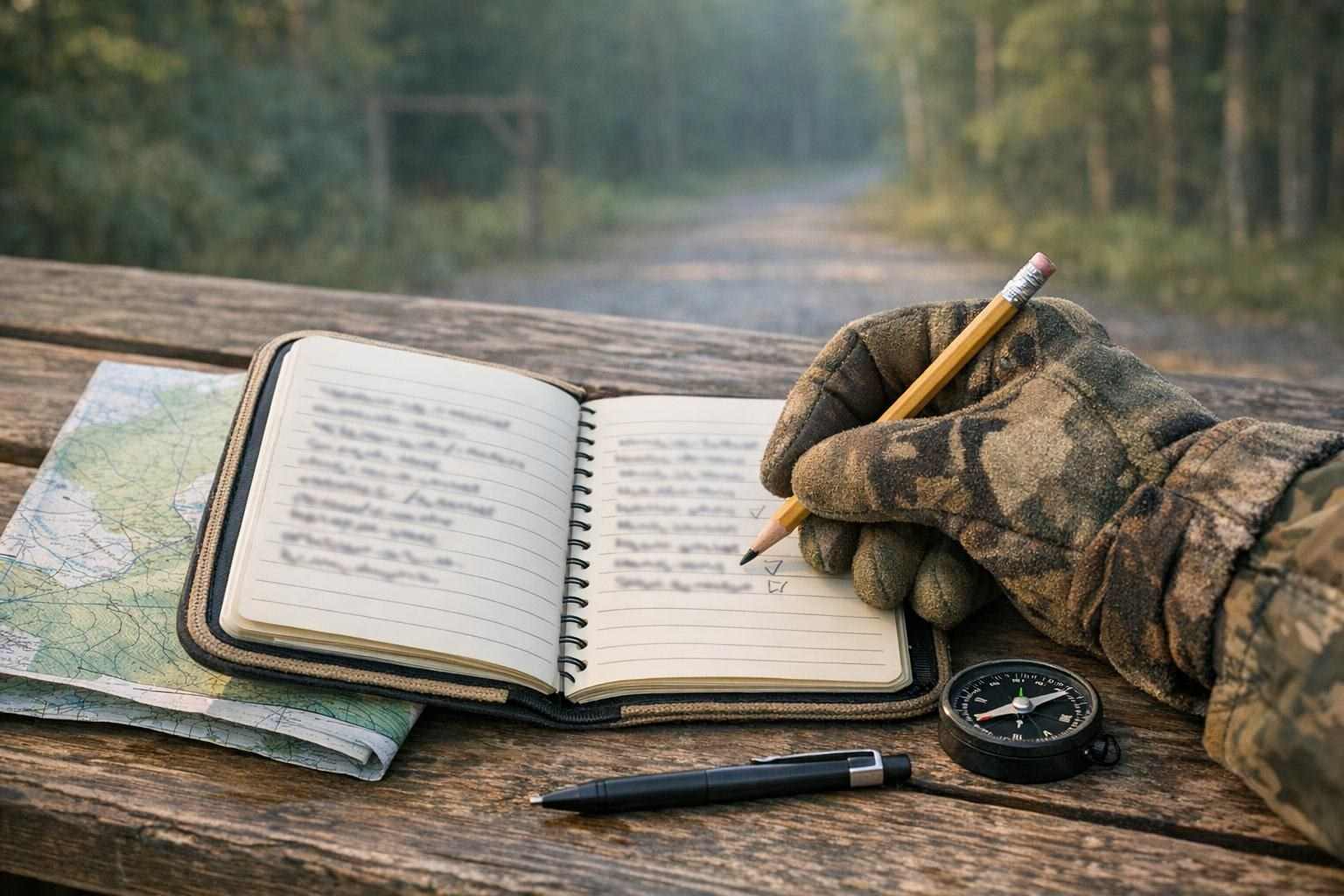
Miss one small detail while planning and that can create a big problem at the gate. That outdated access note, a seasonal closure that you have overlooked in your haste to finalize your plans, or the map you have recorded on which you have not included all of the restrictions – all of these can cause big problems if you don't have all of the rules that affect your hunt recorded with your practical notes.
Start with one trip record, not a pile of screenshots
Make a single note for each planned trip. Call the note something like the name of the place where you will go hunting plus the activity you plan to do plus the date for which you are preparing. Change the date in the note title for each subsequent trip for that place.
Keep the opening lines short:
– Area or unit name
– Intended species or season
– Planned entry and exit points
– Expected dates
– Date you last checked official information
Add other details like links, copied text, map references, reminders and anything else you think necessary to recall. Do not rely on photos of your phone's screen stuck in some gallery somewhere. Take a screenshot and add it to the note along with the source you got it from and the date you checked.
Separate hard rules from useful field notes
Turn your hard-coded information into two headings to distinguish your requirements from your personal field notes. As you add more and more trip plans, you'll appreciate that the first heading, 'Must comply', contains all the information that you must verify against current information every time you go for a trip, while the second heading contains all your trip plans for items that you think will work well for your trip.
"Must comply" would contain the following hard rules for the trip: access permissions, season, method, and legal requirements for the area (such as, the ability to park and to enter the property). The words should be mostly a copy of the official agency web site or other official source for the area, with possibly some surrounding text marked as 'unresolved' if the rule is not completely clear to you.
The second heading should be used for all the notes about where you might park, the best route to walk, your worries about the weather, the clothing you might like to take, water, your map and compass back-up plans and any other personal observations that you have previously made when visiting this area.
Don't rely on notes saved for a long time for legal information – go to the current information on the relevant website for your hunting trip before you go for last minute changes to the regulations, to find out if there are any unexpected closures, etc.
Record the legal access question explicitly
Make sure to include Legal access as a separate line in your notes, as what may look like a place that you can hunt on a map, does not necessarily mean you can legally enter the area to reach your point for hunting. Include the legal access route that you will use to get to your hunting location in your notes, and be sure to include any boundary issues in the notes as well.
B. Outline the public access route you plan to use to enter the area. Describe any Boundary Concerns that you have and record whether or not the route to hunting is over private property and if so what requirements are in place (i.e. gated, permission granted by landowner, parking available on public lands, etc.).
For uncertain boundaries verify the use of current agency maps and official documents such as land use and other relevant information prior to your trip. Note that map applications are only for public access to property and are not to be used as the sole source of boundary information.
Build a change check into the departure routine
Change a note into a hunting trip checklist. All notes older than a week or so should become part of a useful document that can be referenced later for improved hunting practices and planning. Put all information about a future hunting trip into a simple checklist to use when you are preparing to leave for the trip.
Use the same sources of information that the website would direct you to for the latest information. Check for recent notices and try to allow enough time for them to reach you before you leave for your hunt. Keep a record of the page title, date checked, and relevant information in your note. The note won't make old rules current but will highlight any areas of concern.
If the information is posted at a kiosk or gate then read it before entering the property. It may also be worth taking a photograph of the information with your phone in case you need to refer back to it later. However, ensure that taking the photograph does not distract from reading the conditions that apply to that property.
Turn the note into a useful hunting trip checklist
First list the documents that you will need for the hunt, and make sure that all of the legal requirements for the trip have been met. Next list the items that you will need for travel to and from the hunting location. Continue with a list of the items that you will need for entry onto the property, for your time in the field, and for your departure from the property.
A compact version might include:
– Current rules and access confirmation
– Required license, permit, or identification
– Map, compass, charged phone, and backup navigation
– Weather-appropriate clothing and water
– First-aid supplies and communication plan
– Safe transport and storage arrangements for equipment
– Pack-out supplies for trash and spent materials
– Exit time, vehicle location, and contact plan
Be sure to think about how each piece of gear will be used on the actual route for the trip and select accordingly. It is easier to leave excess gear behind than to be forced to deal with it as a problem when it becomes a crisis on the trail. Include the reason for less than obvious items so that in the future you can cross them off if no longer relevant.
Add stewardship and fallback decisions before pressure arrives
A simple reminder to close a gate, mark closed areas on a tree, to drive on roads and on other surfaces as designated, to pack out all trash and spent materials, and to refrain from damaging any wildlife habitat features can all be included. Once written these simple stewardship reminders can be easily remembered in the face of adversity.
Include a contingency plan. Identify alternate access points, alter activities or events or return home in a timely manner should a primary access point close due to uncertainty with regard to boundary lines or other unforeseen events including weather-related issues that may impact travel to and from your destination. Do not allow a long haul to or within a destination or short hunting season drive unjustified risk into your decisions regarding regulated restrictions to access public lands for hunting.
For later use, note down the following points of reference: Which areas and entrances were open? Which path did you take? Were there any items of equipment which were not needed? What needs to be checked for the next trip?